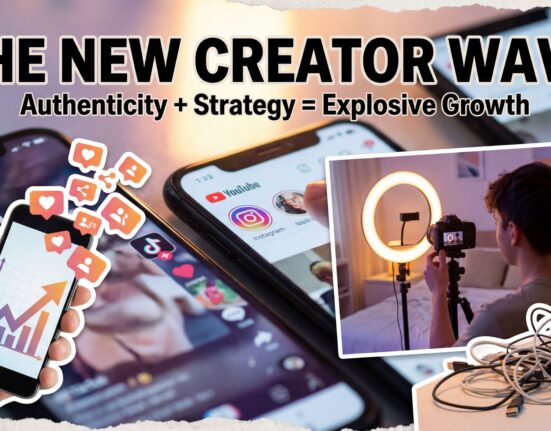
I knew social media had officially changed sometime around February this year, when I watched a video with 2.3 million views that looked like it had been filmed accidentally. No ring light. No jump cuts. Bad lighting. Someone holding their phone too close to their face like they were FaceTiming a friend at 1 a.m. to gossip.
And yet—millions of views. Thousands of comments saying things like “this feels real” and “finally, not overproduced.”
That was the moment it clicked for me: 2026 isn’t about better content. It’s about believable content.
We’ve crossed a psychological line. Audiences can smell strategy now. They flinch at polish. They scroll past perfection. And they reward things that feel human, slightly awkward, and unplanned—even when they’re not.
So if you’re still chasing trends from 2023, posting hyper-edited videos, or trying to “hack the algorithm” like it’s a vending machine, this article might sting a little.
Good. It should.
These are the social media trends dominating 2026, not because platforms announced them in press releases, but because real people are voting with their thumbs, attention spans, and trust.
1. AI content didn’t replace creators—it exposed the lazy ones
Let’s address the elephant that everyone tiptoes around.
AI-generated content is everywhere in 2026. Scripts. Captions. Images. Videos. Voices. Entire accounts.
And no, the sky didn’t fall.
What actually happened is more interesting—and more uncomfortable.
AI didn’t kill creativity.
It killed mediocrity that relied on effort alone.
In 2024, simply posting consistently gave you an edge. In 2026, consistency without originality is invisible.
Here’s the paradox people struggle with:
Audiences don’t hate AI content. They hate soulless content.
They don’t care how something was made. They care whether it:
- Says something new
- Feels honest
- Has a point of view
- Sounds like a real person with skin in the game
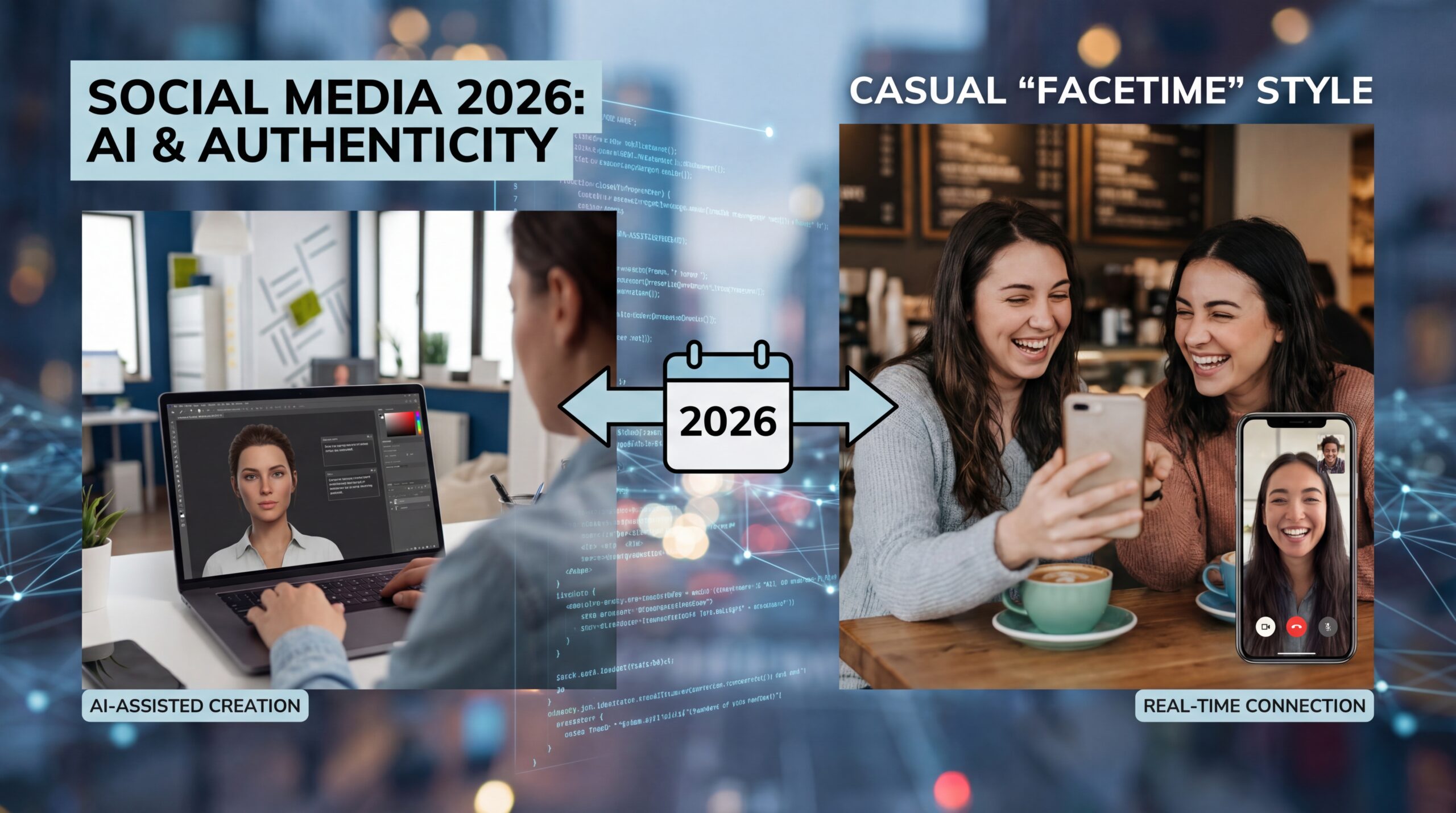
The creators winning right now aren’t hiding AI. They’re using it like scaffolding, not a replacement brain. The voice, opinions, timing, and emotional beats still come from a human who understands culture.
You can tell when someone pressed “generate” and walked away. It reads like oatmeal with no salt.
And people scroll.
2. The “FaceTime video” aesthetic is not a style—it’s a trust signal
Let’s talk about the most misunderstood trend of 2026.
Casual, FaceTime-style videos aren’t popular because they’re lazy.
They’re popular because they lower defenses.
When someone talks into their phone like they’re updating a friend:
- No heavy edits
- No background music screaming for attention
- No visual tricks begging to be watched
…it subconsciously tells the viewer: “I’m not selling you something. I’m just talking.”
That feeling is addictive in a world drowning in marketing.
Brands tried to fake this and failed spectacularly. You can’t workshop authenticity. The moment a “casual” video goes through five approval rounds, it dies.
The creators doing this well:
- Ramble a bit
- Pause mid-thought
- Change their mind halfway through a sentence
- Say “wait, actually—”
Those imperfections are the point.
This is why overproduced studio content is quietly losing ground. Not because it’s bad—but because it feels like an ad before you even know what it’s about.
3. Social platforms are becoming search engines (again)
People keep calling this “new,” but it’s really a return to human behavior.
In 2026, social media is where people go to look things up, not just be entertained.
They search:
- “How do I leave a job without burning bridges”
- “Best workouts after 30 that don’t wreck your knees”
- “Is moving abroad actually worth it”
And they expect answers from people—not brands.
This is why long captions, explanatory videos, and opinionated breakdowns are outperforming flashy nonsense. Platforms are rewarding content that solves something, not just something that looks good.
Creators who understand SEO, yes—but more importantly, intent—are quietly dominating.
If your content doesn’t answer a real question or reflect a lived experience, it struggles to stick.
4. Short-form video isn’t dying—it’s maturing
Every year someone declares short-form video dead. Every year they’re wrong.
What is dying is novelty.
In 2026, short-form video has rules now—unspoken ones.
People expect:
- A reason to watch in the first 3 seconds
- A clear point, even if it’s emotional
- No wasted motion
The era of “just vibes” content is shrinking. Not gone, but shrinking.
What’s replacing it is micro-storytelling:
- One idea
- One tension
- One takeaway
Even casual videos have structure now. Not obvious structure, but felt structure.
The creators who say, “I don’t plan my videos” are usually lying—or they’ve internalized storytelling so deeply it looks effortless.
5. Personal brands are replacing faceless pages (even for businesses)
Here’s a truth that makes a lot of companies uncomfortable:
People trust people more than logos. Always have. Always will.
In 2026, faceless brand accounts struggle unless they:
- Are insanely useful
- Or insanely entertaining
Everyone else is slowly shifting toward human-led branding.
Founders showing up.
Employees becoming faces.
Creators becoming ambassadors without contracts.
It’s not about influencer culture anymore. It’s about familiarity.
If I see the same person explaining something thoughtfully over time, I trust them. If a logo does it, I analyze it.
That difference is everything.
6. “Educational” content is getting less formal—and more dangerous (in a good way)
Education used to mean:
- Clean slides
- Neutral tone
- No opinions
In 2026, that stuff feels sterile.
The educational content that spreads now is:
- Opinionated
- Slightly confrontational
- Willing to say “most people get this wrong”
People don’t want information. They want interpretation.
They want someone to look at chaos and say, “Here’s what actually matters.”
This is why creators who challenge common advice outperform those who politely summarize it.
Safe information is forgettable.
7. Comments are becoming content (again)
This one sneaks up on people.
In 2026, comments aren’t an afterthought. They’re a continuation of the post.
Smart creators:
- Ask questions they actually want answered
- Respond publicly, not just with emojis
- Turn comment debates into follow-up content
Some of the most viral videos this year started as replies to a single comment that hit a nerve.
Audiences want to feel part of the conversation—not managed, not “engaged,” but heard.
If your comment section feels like a graveyard or a customer service desk, something’s off.
8. Long-form content is quietly winning—without looking long
Here’s a counterintuitive trend: attention spans didn’t die. Patience for boring delivery did.
In 2026, people will:
- Watch a 4-minute video
- Read a 2,000-word post
- Follow a 10-slide carousel
…if it feels worth it.
What doesn’t work is padding.
Long-form content now has:
- Tight pacing
- Clear progression
- Emotional checkpoints
This is why rambling podcasts without a point are fading, while deeply focused solo episodes thrive.
Length isn’t the enemy. Wasted time is.
9. Cultural literacy matters more than technical skill
This one separates professionals from amateurs.
You can master every platform feature and still fail if you don’t understand culture.
In 2026, trends move fast, but contexts move faster:
- What jokes are tired
- What language feels outdated
- What formats feel manipulative
Creators who feel “off” aren’t always doing something wrong technically. They’re just slightly out of sync with how people are talking right now.
This is why spending time as a consumer matters. Not researching. Consuming. Watching. Listening. Absorbing.
The best creators aren’t always the smartest. They’re the most observant.
10. People are done being “inspired”—they want honesty
This one’s personal.
I’ve watched motivational content slowly lose its grip. Not because hope is dead—but because fake optimism is exhausting.
In 2026, people respond to:
- “This is hard, and here’s how I’m dealing with it”
- “I tried this, it didn’t work, and here’s why”
- “I don’t have the answer, but I’m thinking through it”
Polished success stories feel distant. Messy process stories feel close.
The creators growing fastest aren’t presenting themselves as finished products. They’re inviting people into the middle.
And that takes courage most brand guidelines don’t allow.
11. Algorithms reward retention—but humans reward resonance
Here’s the part most strategy threads miss.
Yes, algorithms care about watch time, saves, shares. That hasn’t changed.
But the reason people stick around has.
They stay when content:
- Makes them feel understood
- Puts words to a thought they couldn’t articulate
- Challenges something they believed
Virality in 2026 often looks quieter at first. Fewer fireworks. More depth.
Then it spreads slowly. Organically. Like a recommendation whispered between friends.
12. The creators burning out are the ones chasing everything
Let me end with an uncomfortable observation.
The creators who are exhausted right now are usually:
- Chasing every trend
- Posting everywhere
- Adapting constantly without anchoring to anything
The ones thriving picked:
- A voice
- A lane
- A rhythm
They let trends pass through them instead of dragging them around.